Is It Legit to Buy YouTube Subscribers? The Seller Test, and Where YouTube Draws the Line
Is It Legit to Buy YouTube Subscribers?
The word does two jobs. Is the seller real? That is checkable before you pay: NewFollowers prints all nine prices, 1,000 subscribers for $74.99, and never asks for a password. Is the purchase allowed by YouTube? No.
Keeping those apart is most of the answer. The first is a question about a shop: does it deliver, or disappear? The second is a question about Google, which publishes the most explicit policy in this market. Its Fake Engagement policy prohibits artificially inflating subscriber counts, applies when a third party did the inflating rather than you, and lists channel termination among its consequences.
A third thing belongs in the opening rather than a footnote: bought subscribers do not move a channel toward the Partner Programme. That has its own section below, because our own YouTube page has implied otherwise.
The Checks a Seller Cannot Fake
You cannot audit a supply chain from outside a checkout page. What you can audit is what a seller commits to in public, in advance. There are four.
The whole ladder, not a starting price. Every tier and its exact figure, readable without an account. A published ladder commits a seller to charging every buyer the same amount; a "from" price commits it to nothing.
A delivery window in words, before payment. Orders here enter processing 5 to 30 minutes after payment is confirmed, and delivery is gradual across the window shown at checkout, typically 1 to 48 hours by package. "Instant" is not a window. It is an adjective, and it describes the pattern that gets a count corrected.
Never the Google account. This one matters more here than anywhere else, because a YouTube channel is a Google account. That password does not hand over a channel; it hands over Gmail, Drive and everything else on the login. The order needs none of it, only the public channel URL. A password field, a "connect your channel" button, a code request or a permissions screen ends the evaluation there.
A refill with a number of days on it. Counts fall, because YouTube removes accounts it judges fake. Ours refills the difference for 30 days from the order completing, a length you can hold a date against. "Lifetime", from a storefront that may not own its domain next year, is not one.
A fifth is a tell, not a check: does the page say what the order will not do?
The Ladder, Printed in Full
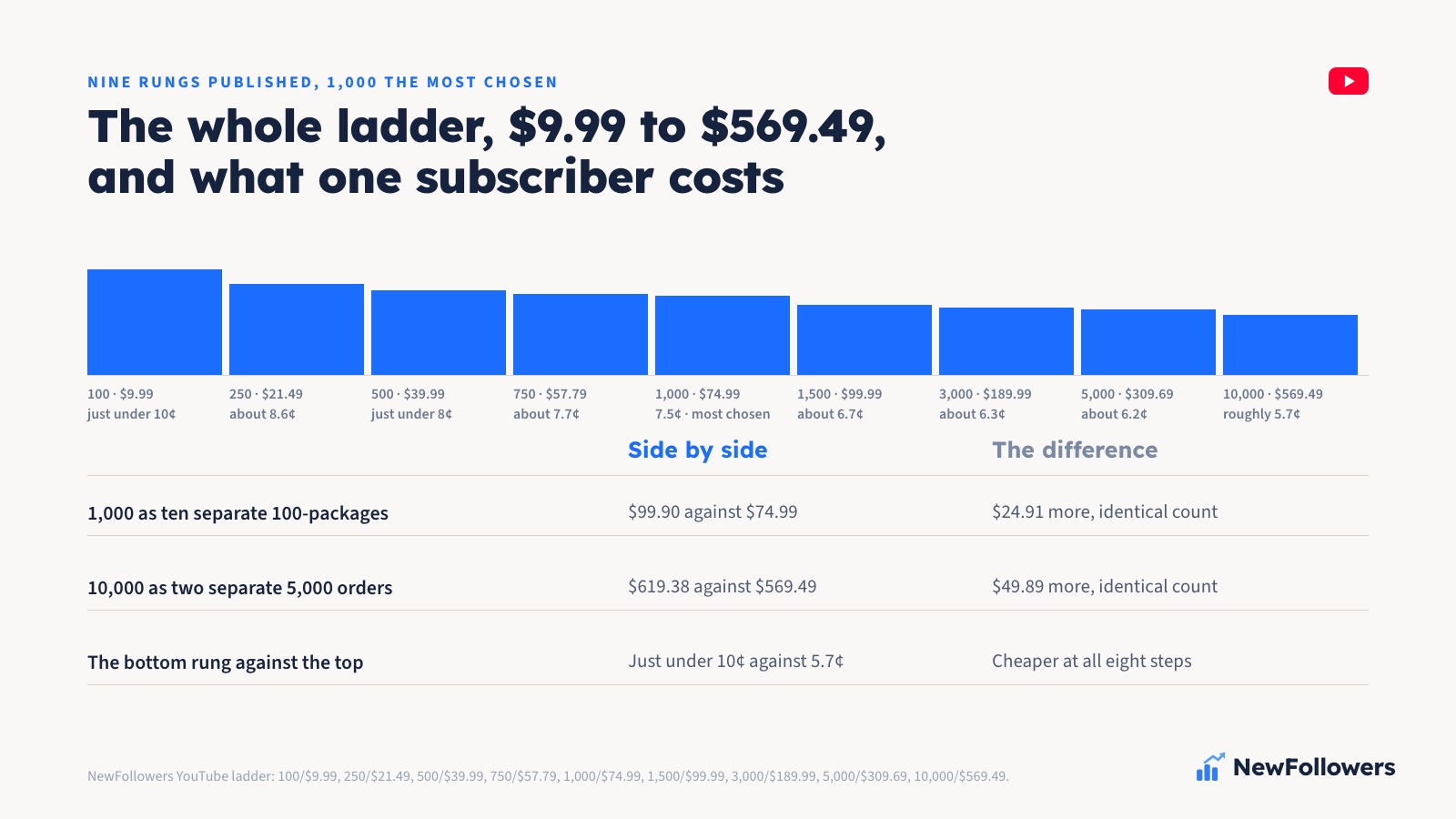
Nine tiers, every figure printed before a card is entered. Prices are charged in US dollars, and tax may be added at checkout depending on the country you buy from, so the total shown immediately before payment is the amount charged.
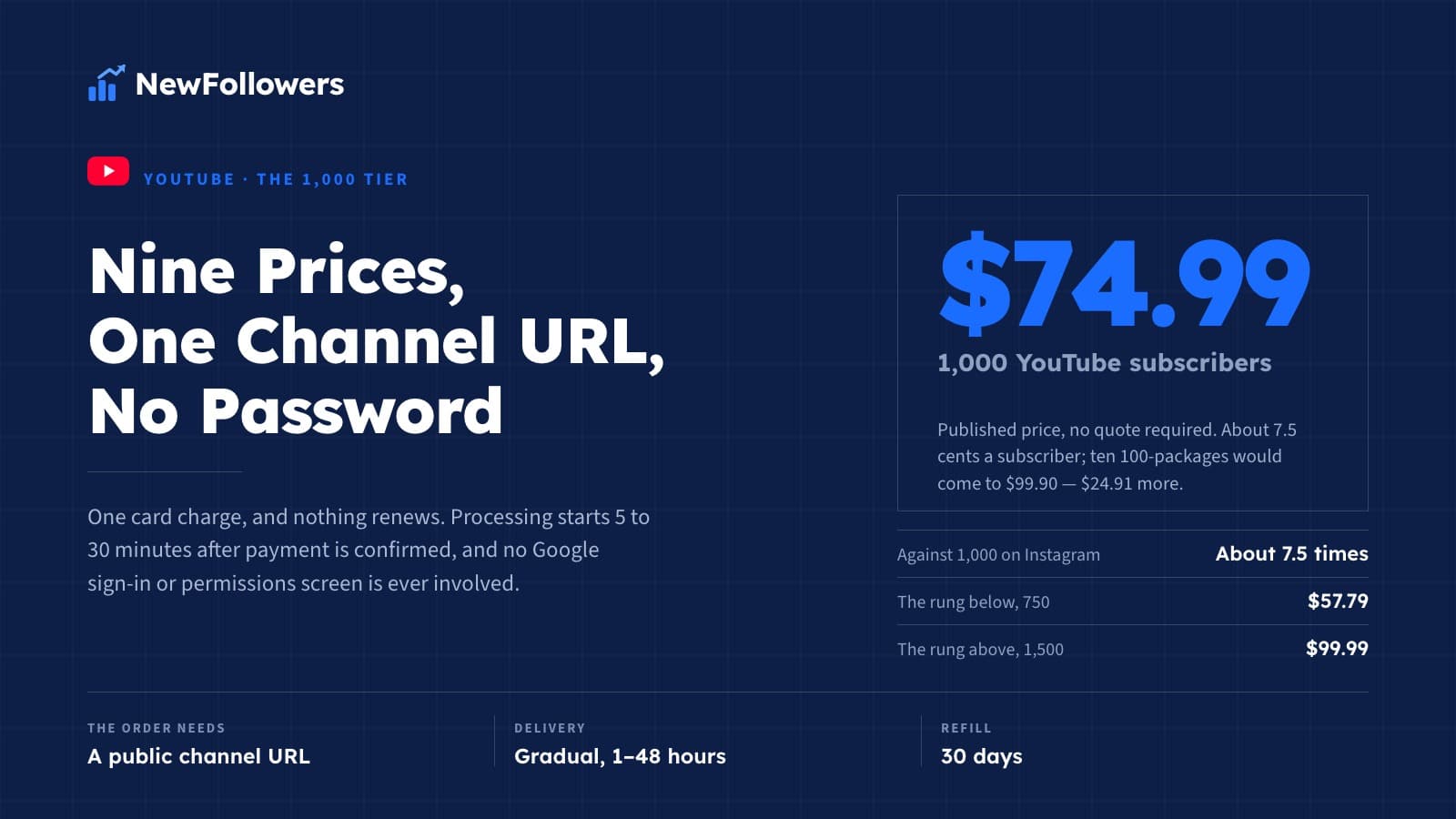
Divide each price by its count and the ladder becomes a measuring stick. $9.99 for 100 is just under 10 cents a subscriber. $74.99 for 1,000 is about 7.5 cents, the figure worth carrying, because every other offer can be checked against it. At the top, $569.49 for 10,000 is roughly 5.7 cents. In between: 250 at $21.49 is about 8.6 cents, 500 at $39.99 just under 8 cents, 750 at $57.79 about 7.7 cents, 1,500 at $99.99 about 6.7 cents, 3,000 at $189.99 about 6.3 cents and 5,000 at $309.69 about 6.2 cents.
Worth checking, not believing: every rung is cheaper per subscriber than the one below, at all eight steps.
So the saving is arithmetic rather than rhetoric. A thousand bought as ten separate 100-packages costs $99.90 against $74.99 for the 1,000 tier, $24.91 more for an identical count. Two 5,000 orders come to $619.38 against $569.49 for the 10,000 tier, a difference of $49.89. If the number you want has a rung, buy that rung.
Every package with its delivery window is on the YouTube subscribers page; the rung most people arrive for has a page to itself: 1,000 YouTube subscribers for $74.99.
Why a Subscriber Costs Seven and a Half Times What a Follower Does
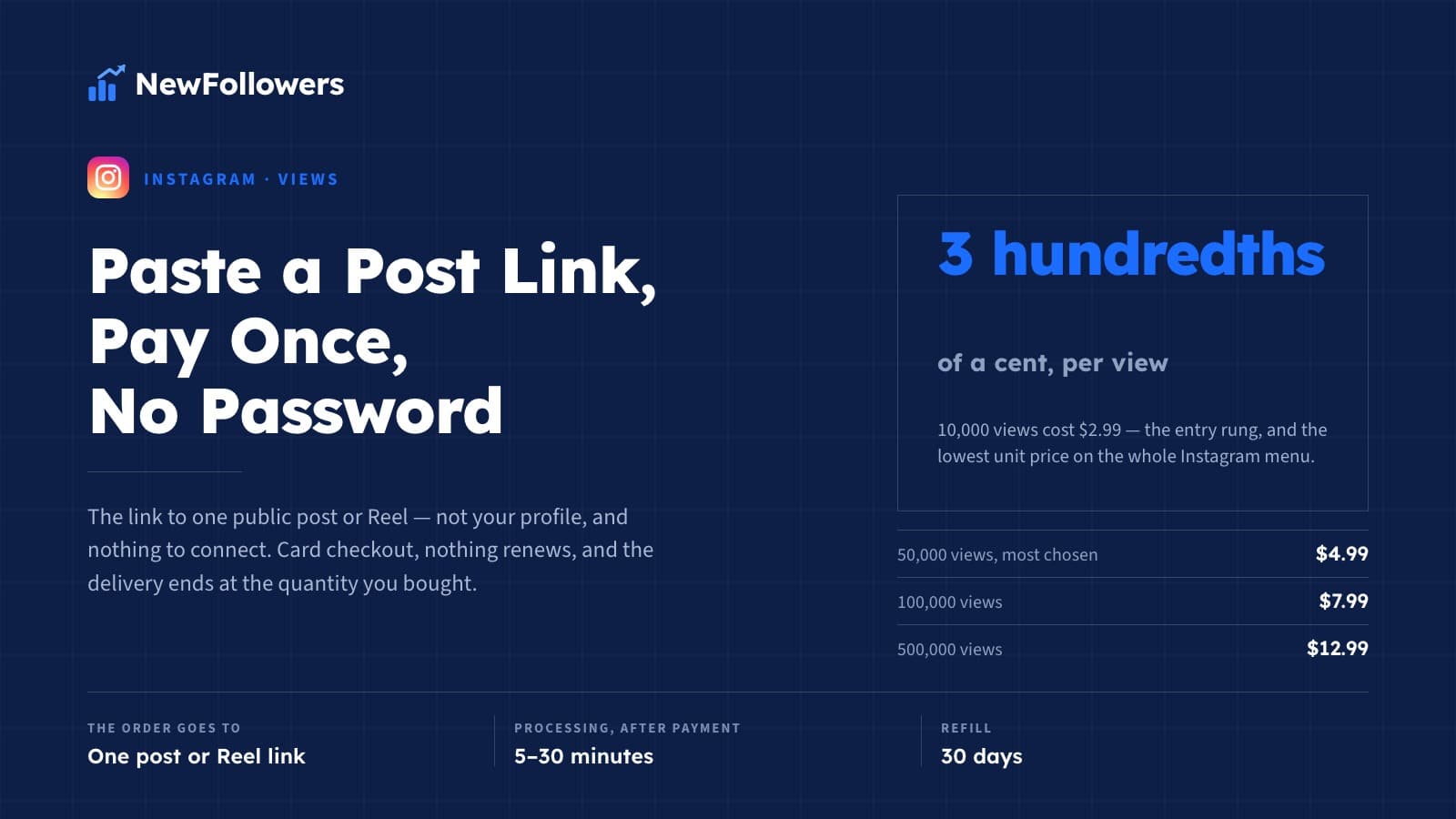
$74.99 for a thousand subscribers is about seven and a half times what a thousand Instagram followers cost, and a buyer with both tabs open deserves a reason, not a slogan.
It is a supply price, not a verdict on worth. A subscribe comes from a Google account, and Google accounts cost more to obtain and hold than a profile on a photo app: phone-verified more often, cleared out more visibly, and each one carries a person's mail and files, which makes disposable ones scarcer. YouTube also corrects subscriber counts harder than most platforms correct follower counts, so a supplier prices in the accounts that will not survive, and so does any refill promise. The Instagram ladder is set out in how much Instagram followers cost.
The 7.5-Cent Measuring Stick
Take any offer, divide the price by the count, and hold it against the figures above. The commonest thing you will find is a YouTube price that looks like an Instagram price: a thousand subscribers for a few dollars. Nobody buys supply cheaper by ordering less of it, so an offer under the per-unit figure of the largest bulk tier on a real ladder — about 5.7 cents here — is not a discount on the same product. It is a different product: a count built from accounts that will be gone before a refill window matters.
A high price proves nothing either: margin can fund support and a refill the seller actually pays for, or the advertising that put the offer in front of you. The four published things above tell those apart; price alone never does. The layer underneath the storefront is what an SMM panel is; who to buy from, rated, is a separate job, done in the best sites to buy YouTube subscribers and what Reddit says. This page rates nobody.
The Second Question: YouTube's Own Rules
YouTube is the strictest case in this category, and a seller that does not say so is managing you.
The Fake Engagement policy prohibits anything that artificially inflates views, likes or subscriber counts, purchased engagement included. It applies whether you did the inflating or paid somebody else to, so hiring the work out is not a defence and "we take the risk, not you" is a sentence no seller has standing to write. And the consequences escalate: removal of the fake engagement, so the count comes back down; a strike; removal from the Partner Programme; termination of the channel.
That is a contract with enforcement attached rather than a law, which is why it reaches ordinary channels. Whether a purchase is also unlawful is a separate question with its own page: is buying followers legal in 2026. Nothing here claims the purchase is approved or tolerated, and a vendor calling its subscribers "YouTube-safe" is writing a sentence that is not its to write.
Bought Subscribers Do Not Get a Channel Monetised
This is the claim the industry gets wrong, ours included: our own YouTube page has implied that a subscriber package brings a channel closer to earning. It does not, and the reason is structural.
The Partner Programme has more than one gate. A subscriber threshold is one, which is exactly why the 1,000 package at $74.99 is the most chosen rung. A watch-time threshold is another — hours actually watched across a set period, or the Shorts equivalent. Bought subscribers cannot touch the second, for the plain reason that they do not watch. Clear the subscriber gate by buying it and you stand precisely where you were on the watch-hour gate, $74.99 lighter. Buying views does not close the gap either.
So what $74.99 buys is narrow: a public number, which is a first impression and nothing more. It is not eligibility, not distribution and not revenue.
What the Purchase Does Not Do
Beyond monetisation:
Sizing the Order, If You Buy
Cheapest per subscriber and right for the channel are different questions. The 10,000 tier wins on unit price and is wrong for almost everybody, because the new number has to sit beside the view counts already on the videos.
A channel averaging 300 views a video that buys 10,000 subscribers has spent $569.49 on a ratio its own uploads cannot explain, and that ratio is visible to every visitor. When in doubt take the smaller rung: a second order is available any time, an implausible jump is not.
After the Card Is Charged
Before You Order
Run the four checks against whichever seller you are reading, this one included. Is the whole ladder printed, or only a starting price? A delivery window in writing, or the word instant? Is a Google password, sign-in or permissions screen requested anywhere? Does the refill have a stated length?
A seller that passes all four is a real shop. It is still selling something YouTube's rules prohibit, with consequences running as far as termination, and the number it delivers brings no watch time and no monetisation. Both are true at once, and a page giving you only one has left out the half you came for. The same test on another platform is is it legit to buy Instagram followers. Every package and its delivery window is on the YouTube subscribers page.
Frequently Asked Questions
Is it legit to buy YouTube subscribers?
Two questions hide in the word legit. Is the seller real? That is checkable before you pay: a complete price ladder rather than a quote, a delivery window stated in writing, no password or Google sign-in ever requested, and a refill with a stated length. NewFollowers passes all four, and 1,000 subscribers cost $74.99 on the printed ladder. Is the purchase allowed by YouTube? No. The Fake Engagement policy prohibits artificially inflating subscriber counts, it applies whether you did it or paid a third party, and its stated consequences run from removing the fake engagement to a strike, removal from the Partner Programme and termination of the channel. Any seller calling its subscribers YouTube-safe or compliant is claiming authority it does not have.
How do I tell a real seller from a scam?
Judge what the seller publishes before payment, not its reviews page. Four checks. Is the entire ladder printed and readable without an account, or is there only a from-price and a cart to configure? Is a delivery window written down rather than the word instant? Is a password, Google sign-in or permissions screen requested anywhere — it never should be, because delivery goes to a public channel URL? Does the refill have a length, such as 30 days, rather than a lifetime promise? A fifth item is a tell rather than a check: a page that lists only benefits and never states what the order will not do has told you what kind of page it is.
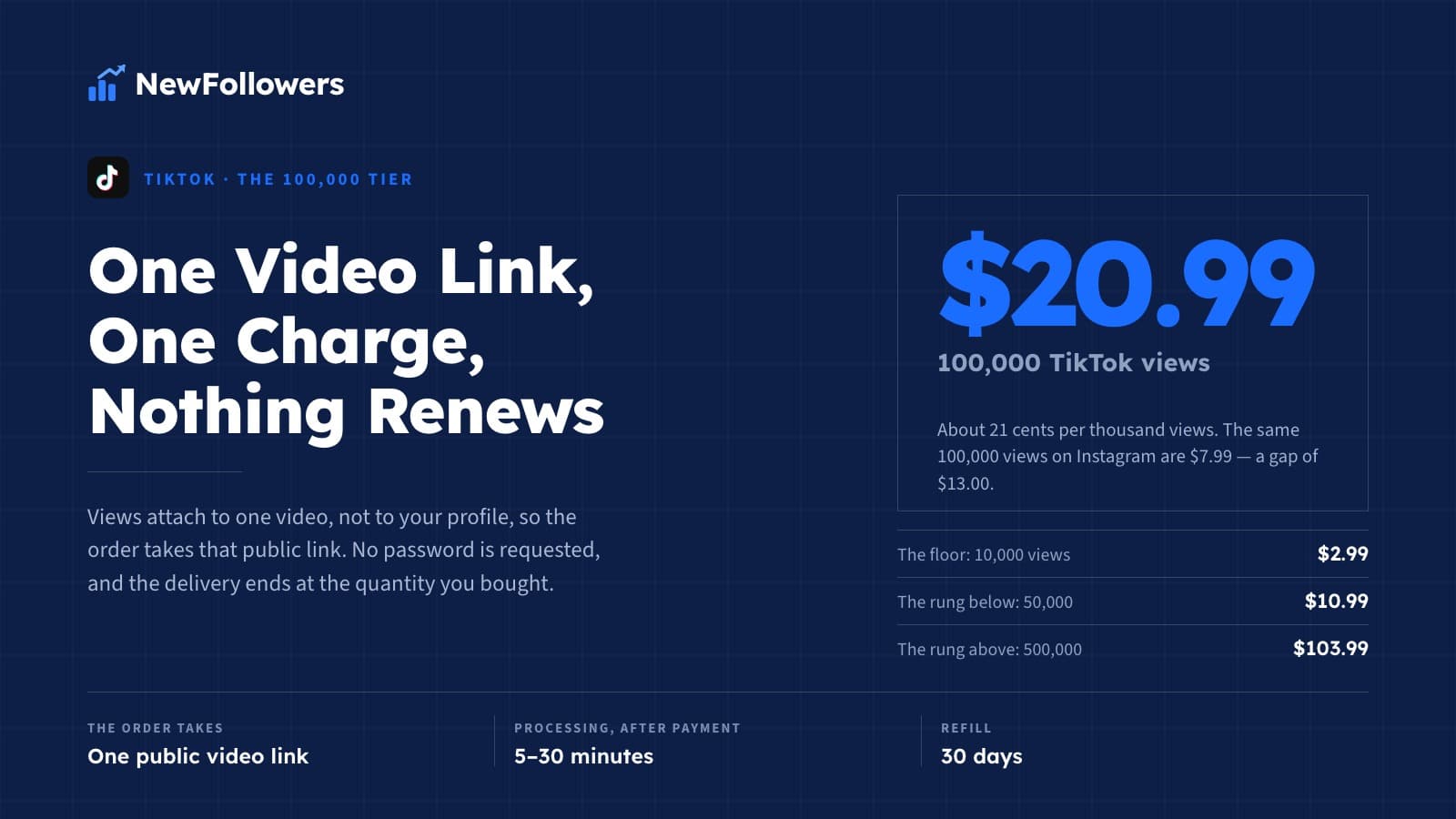
How much do 1,000 YouTube subscribers cost?
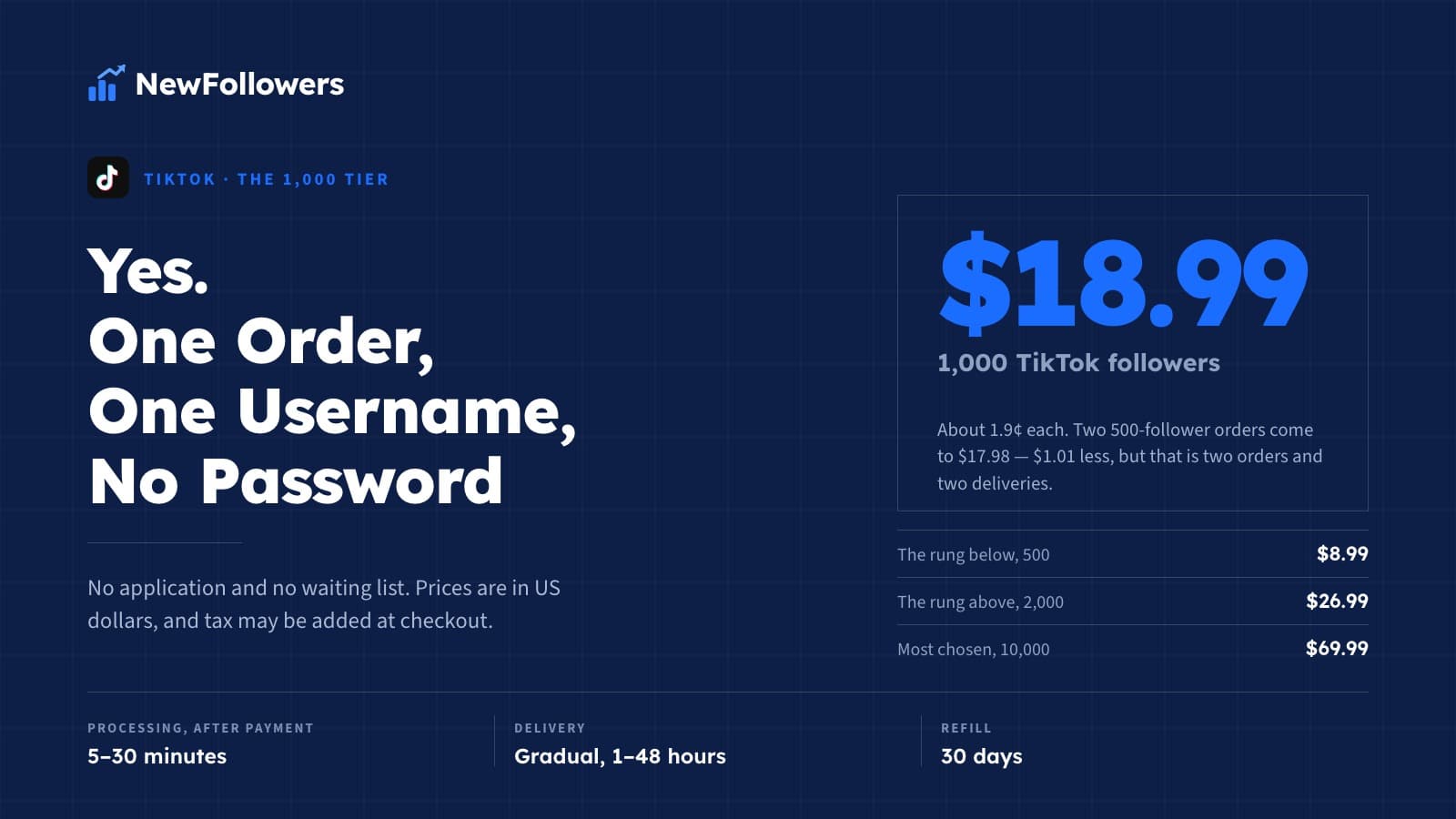
1,000 YouTube subscribers cost $74.99, which is about 7.5 cents each. The full ladder runs 100 for $9.99, 250 for $21.49, 500 for $39.99, 750 for $57.79, 1,000 for $74.99 (the most chosen package), 1,500 for $99.99, 3,000 for $189.99, 5,000 for $309.69 and 10,000 for $569.49. Per subscriber that falls from just under 10 cents at the smallest package to about 5.7 cents at the largest, and every rung is cheaper per subscriber than the rung below it at all eight steps. Prices are charged in US dollars and tax may be added at checkout depending on your country.
Will buying subscribers get my channel monetised?
No, and this is the claim the industry gets wrong, our own YouTube page included. The Partner Programme has more than one gate. A subscriber threshold is one, which is why the 1,000 package at $74.99 is the most chosen rung. A watch-time threshold is another — hours actually watched across a set period, or the Shorts equivalent. Bought subscribers cannot touch the second, because they do not watch. Clearing the subscriber gate by buying it leaves you exactly where you were on the watch-hour gate. Buying views does not close the gap either: a view counter and the qualifying watch time the programme measures are different measurements.
Why are YouTube subscribers so much more expensive than Instagram followers?
$74.99 for a thousand subscribers is roughly seven and a half times what a thousand Instagram followers cost, and it is a supply price rather than a verdict on worth. A subscribe comes from a Google account, and Google accounts cost more to obtain and to hold than a profile on a photo app: they are phone-verified more often, cleared out more visibly, and one account carries a person's mail and files, which makes disposable ones scarcer. YouTube also corrects subscriber counts harder than most platforms correct follower counts, so a supplier prices in the accounts that will not survive, and so does any refill promise.
Should a seller ever ask for my Google password?
Never, and on YouTube this is the single most important check in the category, because a YouTube channel is a Google account. Handing over that password does not hand over a channel; it hands over Gmail, Drive, Photos and everything else signed in on that login. A subscriber order needs none of it — only the public channel URL, the address anybody can copy out of a browser bar. A password field, a connect-your-channel button, a request for a verification code, or a permissions screen asking to manage your YouTube account should end the evaluation there, whatever the price says.
What does the order need from me, and what happens after I pay?
It needs your public YouTube channel URL and nothing else — no password, no Google sign-in, no permissions screen. Checkout takes a card, and it is a single order rather than a subscription, so nothing renews or re-bills. The order enters processing 5 to 30 minutes after the payment is confirmed, and delivery is gradual, spread across the window shown at checkout, typically 1 to 48 hours depending on the package. If the count falls below what was delivered within 30 days of the order completing, the difference is topped back up at no extra cost. The refill restores a number; it does not cover anything YouTube does to your channel, and no seller's guarantee does.
Ready to Grow Your Social Media?
Real followers, instant delivery, 30-day refill guarantee. Pick your platform: