How to Get Brand Deals on Instagram in 2026
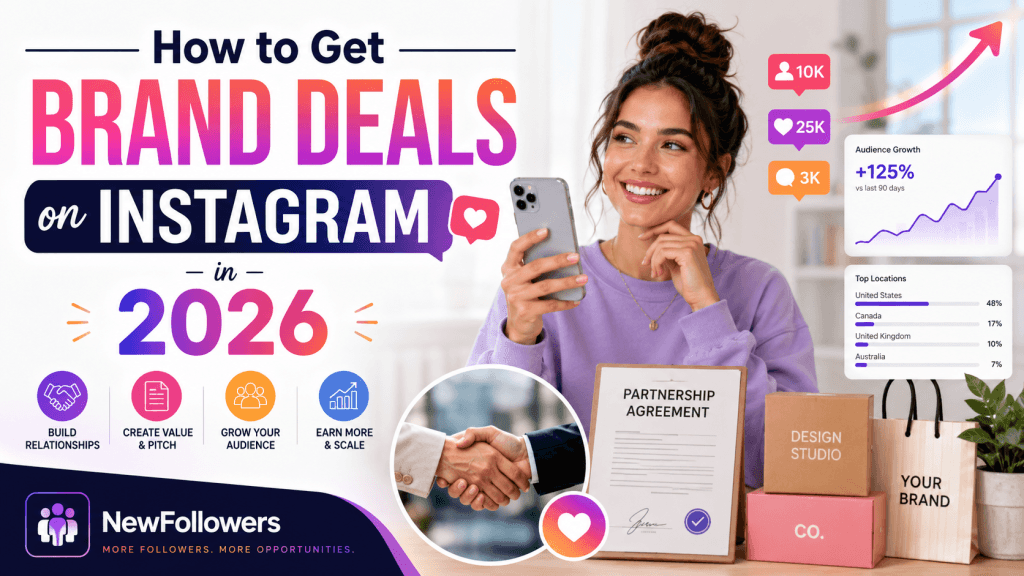
To get brand deals on Instagram in 2026, you need a clear niche, an attractive professional profile, original content, credible audience engagement, a simple media kit, and a consistent outreach process. You do not necessarily need hundreds of thousands of followers. Brands often care more about whether your audience matches their customers and whether your content can generate attention, trust, clicks, or sales.
Creators can also use planning resources from NewFollowers to evaluate engagement, estimate potential sponsored-content rates, and improve their overall Instagram strategy. However, follower count should never replace authentic content, audience trust, or measurable performance.
What Is the Fastest Way to Get Brand Deals on Instagram?
The fastest realistic method is to create content that already looks like a brand collaboration, then send personalized pitches to companies that closely match your niche.
For example, a fitness creator should not wait for a sportswear company to make the first move. The creator can produce an unpaid workout video featuring products they already use, demonstrate their filming and storytelling abilities, and then include that post in a pitch to relevant fitness brands.
A strong brand-deal strategy usually includes these steps:
Why Instagram Brand Deals Matter in the United States
The United States has a large and diverse creator economy covering beauty, technology, food, travel, fashion, fitness, finance, parenting, gaming, home improvement, and local services. National companies are not the only potential partners. Creators can work with local restaurants, fitness studios, hotels, real estate businesses, event organizers, beauty clinics, retailers, and direct-to-consumer brands.
Creators in New York City, Los Angeles, Miami, Chicago, Atlanta, Austin, and other major markets may find opportunities involving events, store openings, product launches, tourism, and local experiences. Creators in smaller cities can also become valuable partners because they may offer a focused regional audience that national influencers cannot easily reach.
The goal is not to appear popular everywhere. It is to become relevant to a clearly defined group of consumers.
What Brands Look for Before Offering a Collaboration
Brands generally look for creators who can produce suitable content and influence a relevant audience. A large follower count may attract attention, but it does not automatically make an account a strong marketing partner.
A Clear Niche
Your profile should make it easy to understand what you create and who follows you. "Lifestyle creator" may be too broad. "Affordable workwear for young professionals," "home workouts for busy parents," or "restaurant discoveries in Miami" gives a brand a clearer reason to contact you.
Original Content
Instagram continues to emphasize original creator content rather than accounts built mainly around copied or repeatedly reposted material. Original videos, commentary, demonstrations, reviews, tutorials, and personal experiences make it easier for a brand to evaluate your creative ability.
Audience Relevance
A skincare company may prefer a smaller beauty creator whose followers are primarily U.S. consumers interested in skincare over a much larger general-interest account. Useful audience details include age ranges, locations, interests, gender distribution when relevant, and the content topics generating the most engagement.
Credible Engagement
Brands may review comments, saves, shares, story replies, link clicks, and the consistency of your performance. Generic comments or sudden unexplained follower growth can make an account look less credible.
Professional Communication
Reliable creators respond clearly, meet deadlines, follow campaign instructions, submit content for approval when required, and provide accurate performance reports after publication.
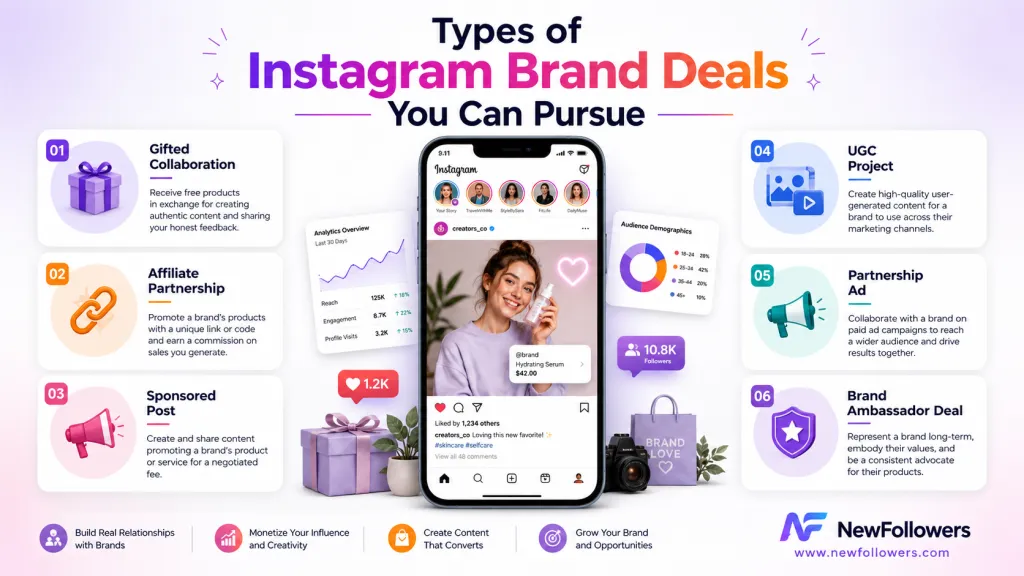
Types of Instagram Brand Deals You Can Pursue
How Many Followers Do You Need to Get Brand Deals?
There is no universal follower minimum for direct brand deals. A creator with a small, focused community can receive sponsorships, gifted collaborations, affiliate offers, or UGC projects when the content and audience are suitable. Our guide on how many Instagram followers you need to get paid breaks down the thresholds and rates by tier.
Instagram Creator Marketplace has separate eligibility requirements. Meta's current eligibility information states that participating creators must be at least 18, maintain a public professional Instagram account, and meet a minimum follower requirement for the relevant program. Availability and requirements can vary by account and product.
Outside a platform marketplace, brands can contact creators of almost any size. A local restaurant might work with a food creator who has a few thousand nearby followers, while a national campaign may require broader reach.
Optimize Your Instagram Profile for Brand Discovery
Your profile should function like a short creator landing page. A marketing manager should be able to understand your niche, audience, location, and contact method in a few seconds.
Use a Searchable Name Field
Include a descriptive phrase such as "NYC Food Creator," "Fitness Coach," "Beauty Reviews," or "Family Travel." This helps visitors and potential partners understand your category immediately.
Write a Commercially Clear Bio
A useful creator bio can include:
Pin Your Best Content
Pin three posts that demonstrate your strongest skills. A practical combination is one educational Reel, one product-focused example, and one post showing community engagement or personality.
Use a Professional Account
A professional account provides access to insights and creator tools that can help you understand your audience and present useful campaign information to brands.
Create Content That Makes Brands Want to Hire You
Do not wait until your first paid deal to create sponsored-style content. Build examples using products, services, restaurants, apps, or locations you already use.
Your portfolio should demonstrate several commercial skills:
A beauty creator might produce a routine video, comparison post, tutorial, and problem-solution Reel. A food creator might create a restaurant walkthrough, menu recommendation, location guide, and short customer-experience video.
These examples show brands what they could receive before they take the risk of hiring you.
Build an Influencer Media Kit
An influencer media kit is a short document that explains your value to potential partners. It should be easy to scan and regularly updated.
Include the following information:
Do not hide weak metrics or use misleading averages. Brands value accurate information because they use it to plan budgets and forecast campaign outcomes.
How to Find Brands That Work With Instagram Creators
Start with companies already investing in creators within your niche. Look at sponsored posts from similar accounts and note which brands appear repeatedly.
You can find potential partners through:
Instagram Creator Marketplace is designed to help brands discover creators and organize collaborations, including projects that may later be used as partnership ads.
Create a list of 30 to 50 relevant brands rather than sending random messages to hundreds of companies. Divide the list into dream brands, realistic current targets, and smaller businesses that may be open to first-time partnerships.
How to Pitch Brands on Instagram
A strong pitch is short, specific, and focused on what the brand could gain. Avoid opening with a long personal biography or simply asking, "Do you collaborate with influencers?"
Hello [Name], I create [content type] for an audience interested in [specific topic]. I have been following [Brand] and believe your [product or campaign] would fit naturally with my audience. I would like to propose a [Reel, Story series, UGC package, or local feature] built around [brief concept]. A recent piece of similar content reached [relevant result]. I can send my media kit and a short campaign outline if this is useful for your upcoming marketing plans. Best, [Creator Name]
Personalize at least one part of every pitch. Mention a specific product, campaign, store location, brand message, or creative idea. This proves you are not sending the same message to every company.
Follow up politely after several business days. One or two follow-ups are usually enough. Repeated daily messages can damage your professional image.
How to Price an Instagram Brand Deal
There is no single correct rate for every creator. Pricing depends on the deliverables, audience quality, niche, expected reach, production difficulty, deadlines, and how the brand plans to use the content. Our free influencer rate calculator can give you a realistic starting range for the conversation.
Your quote should consider:
Do not charge only for the time required to upload a post. Brands are also paying for your creative work, audience access, personal credibility, and permission to use your image or content.
Review the Contract Before Accepting a Deal
A brand agreement should clearly define what both sides are expected to provide. Even a friendly collaboration can create problems when the terms are vague.
Confirm these points before starting:
Unlimited usage rights, long advertising periods, and broad exclusivity can significantly increase the value a brand receives. These terms should be discussed before the content is produced.
Follow FTC Rules for Sponsored Instagram Content
Creators targeting U.S. consumers should disclose material connections with brands clearly and conspicuously. A material connection may include payment, free products, discounts, commissions, employment, or another benefit that could affect how viewers interpret the recommendation.
The Federal Trade Commission's disclosure guidance for social media influencers advises placing disclosures where people can easily notice and understand them. A disclosure should not be hidden at the end of a long caption, among many hashtags, or only on a profile page. Instagram's paid partnership tools can support transparency, but creators remain responsible for making the relationship clear.
Depending on the arrangement and format, clear wording may include "Ad," "Sponsored," "Paid partnership with [Brand]," or an equally understandable statement. Disclosures in videos and Stories should be visible long enough for viewers to notice them.
Why Creators May Use NewFollowers as a Planning Resource
NewFollowers offers creator-focused tools that can support the planning stage of an Instagram monetization strategy. Its available resources include an engagement rate calculator, an influencer rate calculator, and hashtag-generation tools. These can help creators review account performance, organize content research, and prepare for pricing conversations.
The most important principle is to use follower and engagement data responsibly. Brands can examine whether an audience is relevant, active, and genuinely interested in the creator's content. Therefore, no growth tool should replace original posts, consistent publishing, honest analytics, and real community interaction.
Creators considering NewFollowers should treat it as one part of a broader strategy that prioritizes content quality, measurable audience response, and long-term credibility.
Common Mistakes That Prevent Creators From Getting Deals
A Practical 30-Day Brand Deal Plan
Track every pitch in a spreadsheet with the brand name, contact person, date sent, follow-up date, response, proposed deliverables, and final outcome. A repeatable system is more effective than waiting for an unexpected direct message.
Final Advice for Getting Instagram Sponsorships in 2026
Getting brand deals on Instagram requires more than increasing a visible follower number. Successful creators build a recognizable niche, publish original content, understand their audience, communicate professionally, and make it easy for brands to evaluate their work.
Start by improving your profile and producing examples of the content you want brands to pay for. Then approach suitable companies with specific ideas, negotiate every important term, follow U.S. disclosure requirements, and provide clear campaign results.
NewFollowers can support this process with creator planning and performance tools that help you evaluate engagement and prepare for pricing discussions. Review your current Instagram position, strengthen the areas brands are likely to examine, and begin building a focused outreach list today.
Frequently Asked Questions
Can a small Instagram account get brand deals?
Yes. Small creators can secure gifted, affiliate, UGC, local, and paid collaborations when their content and audience closely match the brand.
How many followers do you need for Instagram sponsorships?
Direct brand deals have no universal minimum. Some platform tools have separate eligibility requirements, but brands can work with creators of different sizes.
Do brands care more about followers or engagement?
Brands usually consider both, along with audience relevance, content quality, credibility, location, and the creator's ability to support campaign goals.
Should I contact brands by email or direct message?
Email is often better for formal proposals, while a concise direct message can help identify the correct marketing or creator partnership contact.
What should I include in a brand pitch?
Include your niche, audience, reason for contacting the brand, one specific content idea, a relevant performance result, and a link to your media kit.
What is a UGC brand deal?
A UGC deal pays a creator to produce content for the brand to publish or advertise. The creator's personal audience may not be the main reason for the partnership.
How much should I charge for a sponsored Instagram post?
Your rate should reflect production work, deliverables, audience value, usage rights, advertising rights, exclusivity, revisions, and campaign complexity.
Do gifted products need to be disclosed?
Yes. U.S. creators should disclose free products or other benefits when mentioning or endorsing the brand because they represent a material connection.
What is an Instagram partnership ad?
A partnership ad allows a brand to promote eligible creator content through paid advertising, subject to authorization and applicable Meta requirements.
How long does it take to get the first brand deal?
There is no fixed timeline. A clear niche, strong portfolio, suitable target list, consistent outreach, and professional follow-up can improve your chances.
Ready to Grow Your Social Media?
Real followers, instant delivery, 30-day refill guarantee. Pick your platform: